
From Complexity to Clarity: Scaling Innovation through Modular Design Systems

By Brand Strategy, User Experience

"It’s incredibly powerful: if you can figure out how to use it."

Have you heard someone say this about your product? Have you said it yourself?

There’s no getting around it: visionary ideas are often complicated. When you’re building something that’s never been done before: especially in high-stakes industries like ag-tech or data science: complexity is the default setting. But here is the hard truth: If your users can’t navigate your innovation, your innovation doesn't exist to them.

Many businesses fall into the trap of believing that "more features" equals "more value." In reality, the opposite is often true. Every extra click, every confusing menu, and every inconsistent button adds friction. And friction is the silent killer of growth.

The good news is that you don't have to sacrifice power for simplicity. You just need a better system.

Table of Contents

  1. The Friction Problem: When "Powerful" Becomes "Painful"
  2. The INTENT Story: From Dev-Led to User-Centric
  3. What is a Modular Design System?
  4. Decision Design: Our Philosophy for Removing Friction
  5. Scaling Innovation: How Design Systems Fuel Growth
  6. Why Brand Alignment Starts with the User Interface

The Friction Problem: When "Powerful" Becomes "Painful"

Have you ever felt like your digital product is holding your business back?

It’s a common scenario for technical founders and established organizations alike. You’ve spent years perfecting the backend. The data is accurate. The logic is sound. But the interface? It looks like a cockpit from a 1970s jet.

Illegible does not equal inventive.

When a product is "dev-led," it often prioritizes how the machine works over how the human thinks. This creates an administrative burden that drains resources. Your team spends more time on support calls and training than they do on actual innovation. Complexity is a tax on your growth.

As a digital product design agency, we see this friction as the primary obstacle between a great idea and a successful market leader. To remove it, you have to move beyond just "fixing the UI." You have to redesign the way decisions are made.

The INTENT Story: From Dev-Led to User-Centric

Let’s look at a real-world example: INTENT.

Based in the Midwest, INTENT is a powerhouse in the ag-tech space. They built a sophisticated research tool designed to handle massive amounts of agricultural data. It was, by all accounts, a technical marvel. But there was a problem.

The tool had been built by developers, for developers. It was dense. It was complex. It was difficult to navigate for the very people who needed it most. Instead of being a seamless part of the workflow, the software became a hurdle.

They came to ZIV because they knew that to scale, they needed to transform this technical tool into an intuitive experience. They didn't just need a website design and development agency; they needed a partner in creative consulting who could translate their technical vision into a human-centered reality.

The goal wasn't just to make it look better: it was to make it work better.

What is a Modular Design System?

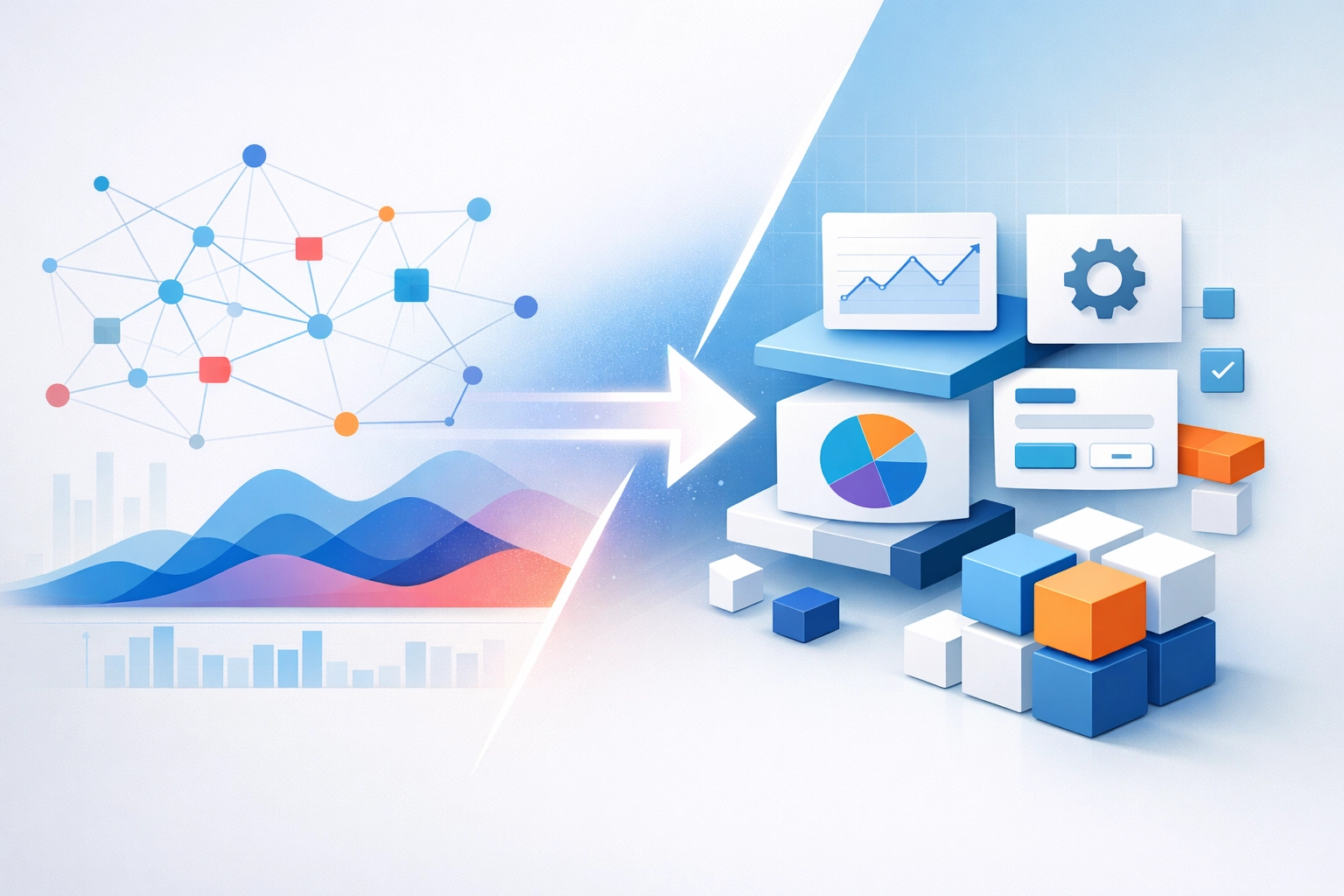
How do you take a massive, complicated system and make it feel simple? You break it into pieces.

A modular design system is a collection of standardized, interchangeable components that can be used to build a digital product. Think of it like a set of LEGO bricks. Instead of building every new page or feature from scratch, you use a library of pre-approved, pre-tested parts.

Standardized modules allow you to move faster without breaking things.

According to our research into high-growth tech firms, modularity addresses complexity by decomposing systems into basic modules. This standardization allows different production processes to occur simultaneously.

  • Speed: You can develop, test, and scale individual modules independently.
  • Consistency: Every part of the product feels like it belongs to the same brand.
  • Flexibility: As market demands change, you can reconfigure your "bricks" without a total redesign.

Yet how can you be sure those pieces actually solve the user's problem? That’s where the design process comes in.

Decision Design: Our Philosophy for Removing Friction

At ZIV, we don’t just "design." We use a philosophy we call Decision Design.

It’s about identifying every point where a user has to make a choice and ensuring they have exactly what they need to make it: no more, no less. For INTENT, this meant a deep dive into the user journey.

We didn't start with code; we started with clarity.

Our process involves several key stages:

  1. Mood Boards: Establishing the visual "vibe" that aligns with the brand’s professional yet innovative identity.
  2. User Flows: Mapping out the exact path a user takes to complete a task. Where do they get stuck? Where do they feel overwhelmed?
  3. Experience Maps: Visualizing the emotional journey of the user.
  4. Prototyping: Building a low-fidelity version of the system to test our assumptions before a single line of production code is written.

By iterating through these stages, we were able to strip away the "noise" of the old INTENT tool. We replaced it with a clean, intuitive interface that felt like a natural extension of the user’s thought process.

The result was a design system that wasn't just pretty: it was functional.

Scaling Innovation: How Design Systems Fuel Growth

Scaling a business is hard. Scaling a complex technical product is even harder.

Without a modular system, every new feature you add makes the product exponentially more difficult to maintain. You end up with a "Frankenstein" product: bits and pieces tacked on over time that don't quite fit together.

A modular design system turns innovation from reactive to proactive.

When INTENT adopted their new system, they didn't just get a better-looking tool. They got a growth engine. Because the components were reusable, they could prototype and test new features in a fraction of the time.

Even better? Consistent quality is enhanced. Because each module is designed and tested independently, you ensure optimal performance for every component. You no longer have to worry that a small update in one area will break the entire system.

Why Brand Alignment Starts with the User Interface

Many people think of a branding agency as the folks who pick your colors and design your logo. While that's part of it, true brand alignment goes much deeper.

Your brand is the promise you make to your customers. If you promise "innovation" and "ease of use," but your digital product is a confusing mess, you are breaking your brand promise every single day.

Your UI is the most frequent touchpoint your customers have with your brand.

By investing in a high-quality design system, you ensure that every interaction reinforces your brand values. Whether a user is looking at a data visualization or an account settings page, the experience remains consistent. This builds trust. And in a competitive market, trust is the ultimate currency.

Want to know if your current setup is helping or hurting? You might want to ask: How to know if it's time for a website redesign?


The Road to Clarity

Moving from complexity to clarity isn't an overnight process. It requires a shift in mindset: from focusing on what the technology can do to what the user needs to do.

But the rewards are worth it. By removing friction through a modular design system, you:

  • Reduce the administrative burden on your team and your users.
  • Accelerate your time-to-market for new innovations.
  • Strengthen your brand alignment across every digital touchpoint.

You’ve built something powerful. Now, let’s make sure people can actually use it.

You're on the road to a more intuitive, scalable future.

Sounds a bit daunting, doesn't it? It doesn't have to be. Whether you are looking for a digital product design agency to overhaul your core tool or a partner for user experience strategy, the first step is simply acknowledging that the friction exists.

Let us know! We love talking about how to turn complex systems into clear, actionable designs. If you want to see the full transformation, check out the INTENT case study to see the "before and after" for yourself.
Your Brand Isn’t a Prompt: The Hidden Dangers of Using AI to Create Your Brand Identity

By Brand Strategy

Canva is great. ChatGPT is powerful. But your brand isn't a prompt.

Have you heard someone say this? "I'll just have AI generate a logo and some brand colors for me. It’ll save me $10k." Maybe you’ve even said it yourself. There’s no getting around it, the allure of a "finished" brand identity delivered in thirty seconds by a chatbot is intoxicating. It feels like a shortcut to the finish line of business building.

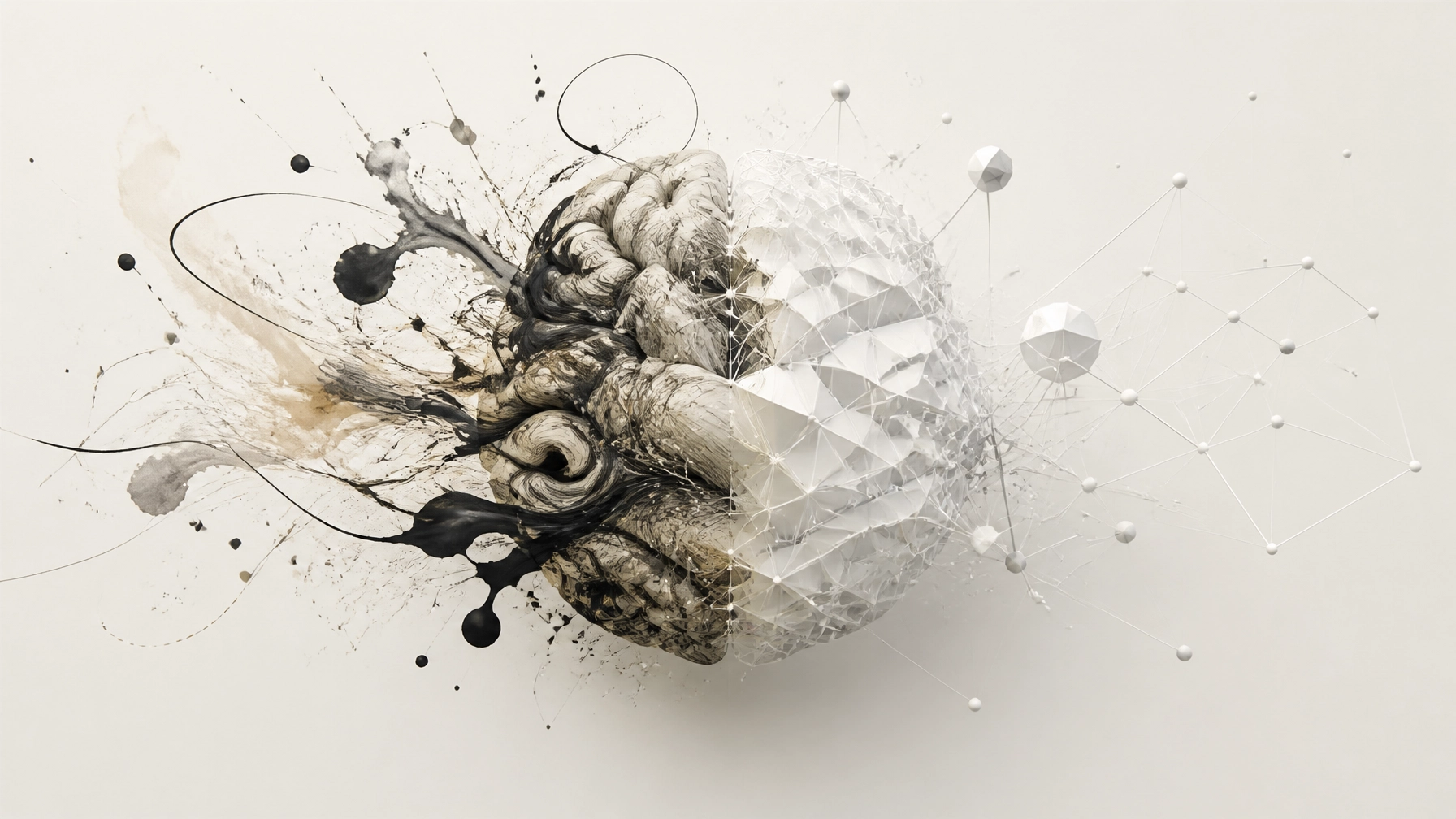
But here is the reality: An algorithm can generate an image, but it cannot build a brand.

At ZIV, we’ve spent over twenty years as a creative consultancy helping organizations navigate transformation. We love tech. We use AI. But we also know that the gap between a prompt-generated "vibe" and a strategic, enduring brand is a chasm that can swallow your business whole.

If you’re tempted to let an AI take the wheel for your brand identity, you’re running into more risks than you realize.


Table of Contents

  1. The Problem: Efficiency vs. Efficacy
  2. Danger 1: The Homogenization Trap
  3. Danger 2: The Missing Strategic Foundation
  4. Danger 3: Creating Friction, Not Clarity
  5. Danger 4: The Legal Ownership Nightmare
  6. The ZIV Solution: Decision Design
  7. Conclusion: Your Brand is an Asset, Not an Output

The Problem: Efficiency vs. Efficacy

Sounds a bit daunting, doesn't it? The difference between getting something done fast and getting it done right.

AI tools are built to give you the "most likely" answer. They are predictive engines. If you ask for a "minimalist tech logo," they will scan the millions of minimalist tech logos they were trained on and give you a composite of the average.

But "average" is the natural enemy of a successful brand.

A brand strategy agency doesn't look for the average; we look for the edge. We look for the "white space" your competitors haven't touched yet. AI creates based on what has been. Strategy creates based on what should be.


Danger 1: The Homogenization Trap

A grid of several simple, generic geometric logos in monochromatic tones, looking indistinguishable from one another.

The "Sea of Sameness" is real, and AI is the fastest way to get there.

Have you noticed how many new startups look… well, the same? The same sans-serif fonts, the same pastel gradients, the same soft-edged icons. This is visual homogenization.

AI trains on averages, so every AI-generated brand eventually sounds and looks the same.

When you use a generic prompt, you get a generic result. If your brand looks like five other companies in your industry, you have already failed the first test of branding: differentiation. If a customer can't tell you apart from your competitor at a glance, why would they choose you?

You aren't building a brand to fit in. You're building it to stand out. Yet how can you stand out when you’re using the same "average" engine as everyone else?


Danger 2: The Missing Strategic Foundation

A conceptual blueprint with a single, perfectly finished marble cube in the center, representing intentional brand design.

A logo without brand strategy is just a picture.

Imagine building a house by starting with the paint color for the front door. That is what AI branding feels like. It gives you the "look" without the "why."

When we work on a rebranding strategy, we ask the hard questions:

  • Who is the primary decision-maker we need to influence?
  • What is the specific friction point preventing them from choosing you?
  • How does your internal culture align with this external promise?

AI doesn't know your customers, your competitors, or your soul. It doesn't know that your CEO wants to move into a new market in three years. It doesn't understand the nuance of your category. Without brand alignment, your visual identity is just a costume. And eventually, the mask slips.


Danger 3: Creating Friction, Not Clarity

At ZIV, we believe in eliminating the friction in the decision to choose our customers. Every design choice should make the path to "Yes" easier.

AI-generated brand identities often create more confusion than clarity.

Because AI lacks "intentionality," it often makes choices that are aesthetically pleasing but functionally confusing. It might pick a color palette that is illegible on mobile devices. It might suggest a name that sounds like a pharmaceutical drug.

Even worse? It creates a fragmented experience. You might get a logo from one tool, a color palette from another, and a tone of voice from a third. The result is a "Frankenstein Brand" that feels disjointed and untrustworthy to the user.

Illegible does not equal inventive. If your brand feels like a collection of disjointed AI outputs, you aren't removing friction: you're adding to it.


Danger 4: The Legal Ownership Nightmare

Word to the wise: The U.S. Copyright Office has been very clear that AI-generated content without "significant human authorship" cannot be copyrighted.

Think about that for a second. If you can't copyright your logo, you don't really own it.

If a competitor decides to use a logo that looks 90% like yours, and yours was entirely AI-generated, your legal standing to stop them is incredibly shaky. Furthermore, many AI models were trained on data that includes copyrighted trademarks. You might "generate" a logo that is accidentally a near-replica of an existing, protected trademark.

A branding agency provides something AI can't: legal and creative due diligence.

Do you really want to build your entire company on a foundation you don't legally own? It's a risk that could lead to a forced (and very expensive) rebrand just as you're starting to find success.


The ZIV Solution: Decision Design

A stylized human hand precisely adjusting glowing geometric elements in a digital system, representing the ZIV philosophy of Decision Design.

The good news is that AI isn't the enemy: it’s an accelerator.

At ZIV, we use a philosophy we call Decision Design. We believe that design is the most powerful tool for influencing human behavior, and that the best outcomes happen when human strategy leads the way.

We don't ignore AI. We use it to:

  • Rapidly prototype hundred of concepts to find the "spark."
  • Analyze massive amounts of market data to find customer friction points.
  • Automate repetitive tasks so our human designers can focus on the soul of your brand.

But the strategy is always human. We ensure your brand isn't just a pretty picture, but a business tool designed to drive growth. We focus on brand alignment, making sure your internal team believes in the story as much as your customers do.

We don't just "prompt" a brand. We architect it.


Before AI there was google image search

When someone is not a brand designer, they sometimes think they can design a brand. We had a case where we redesigned a brand identity for a client, soon after they hired a 'marketing manager' who had lots of experience in financial planning. When she suggested a revised logo to the client, he almost fell for it. Being persuasive likely got her the job. We did our research and pointed out where her logo 'inspiration' came from, and it was the clip art in Google image search. Fortunately the client was stayed with the original vision, one that would gain him the professional image needed for a national, and now international stage, and was created with a story to tell and a solid brand foundation.


Conclusion: Your Brand is an Asset, Not an Output

Your brand is the most valuable asset your company will ever own. It’s what stays in a customer's mind when they close their laptop. It’s the trust you’ve built over years of service. And it's built on nuance, (his)story, and details.

Don't let an algorithm decide the future of your biggest asset.

AI is a brilliant assistant, but it’s a terrible leader. It can give you a starting point, but it can't give you a destination. Whether you are an established organization looking for transformation or a revolutionary business needing a digital presence, you need a partner who understands the nuance of human decision-making.

Want to keep your mind on the day-to-day while we handle the heavy lifting of your brand's future?

Let us know! Let's talk about how insight driven design can take your brand from a "prompt" to a powerhouse. You're on the road to something great: don't let a shortcut slow you down.


Why the best Branding Agencies Don’t just Design Logos, They Design Decisions

By Brand Strategy

“We just need a logo refresh.”

How many times have you heard that in a strategy meeting? Maybe you’ve said it yourself. The thinking goes like this: outdated visual identity equals outdated brand. New logo, new life. Simple, right?

Except it’s not.

A logo is just a mark. It sits on your website, your business cards, maybe your building. But it doesn’t do anything on its own. It doesn’t persuade. It doesn’t convert. And it certainly doesn’t make your customers choose you over the competition.

The best branding agencies understand something fundamental: design isn’t decoration. It’s decision architecture.

Every visual element, every word, every interaction point in your brand experience either moves someone closer to choosing you, or creates friction that pushes them away. When a branding agency only focuses on aesthetics, they’re solving the wrong problem.

What Is Decision Design, Anyway?

Think about the last significant purchase you made. A new software platform for your team. A consulting service. Even something personal like a car or a home.

You didn’t make that choice because of a logo.

You made it because something in that brand’s ecosystem made the decision feel clear. The right information appeared at the right time. The value proposition resonated. The process felt frictionless. Your emotional instincts and logical reasoning aligned.

That’s decision design, the practice of shaping brand experiences that guide people toward confident choices by eliminating hesitation at every touchpoint.

Abstract pathway showing customer decision journey with friction barriers in brand strategy

A brand strategy agency that practices decision design thinks beyond color palettes and typefaces. They ask different questions:

  • Where do our customers get stuck in their journey?
  • What doubts do they have before buying?
  • What makes saying “yes” to us feel risky?
  • How can we remove that friction?

This is where brand alignment becomes critical. When your visual identity, messaging, customer experience, and internal culture all point in the same direction, choosing you becomes the obvious next step.

The Three Pillars: Emotion, Logic, and Behavior

Here’s what research in behavioral economics tells us: people don’t make decisions the way they think they do.

We like to believe we’re rational actors. We weigh pros and cons. We compare features and pricing. We make spreadsheets.

But emotion drives the bus. Logic just helps us justify where emotion already wanted to go.

The best branding agencies design for both, and then optimize for behavior.

Emotion: The Spark

Research shows that 76% of consumers are more likely to buy from a brand they feel emotionally connected to, even when similar alternatives exist. That emotional connection doesn’t come from a clever logo. It comes from consistency, authenticity, and resonance.

Does your brand make people feel understood? Inspired? Safe? Excited?

A brand strategy agency focused on decision design maps the emotional journey first. They identify the feelings your customers need to experience at each stage, from initial awareness through post-purchase advocacy, and then build touchpoints that deliver those emotions reliably.

Logic: The Justification

Once emotion has done its work, logic steps in to make the choice feel smart. This is where clarity becomes non-negotiable.

Your value proposition should be immediately graspable. Your differentiators should be concrete, not vague aspirations. Your pricing and process should be transparent.

Confusion is friction. And friction kills decisions.

Many businesses overlook how much cognitive load they’re creating for potential customers. Jargon-heavy copy. Unclear navigation. Buried pricing. These aren’t just design flaws, they’re decision blockers.

Three interconnected heads representing emotion, logic, and behavior in branding decisions

Behavior: The Action

Here’s where it gets interesting. Even when emotion and logic align, people still won’t act unless the path forward is obvious and easy.

How many steps are there between interest and purchase? How much information do you require before someone can take the next step? Is your call-to-action crystal clear, or are you leaving people to figure it out themselves?

A branding agency that understands decision design obsesses over these micro-moments. They reduce form fields. They simplify language. They create visual hierarchies that guide the eye exactly where it needs to go next.

Because designing decisions means designing for human behavior, not idealized versions of how we wish people would act.

Beyond the Logo: What Decision-Oriented Branding Actually Looks Like

Let’s get concrete. What does this approach look like in practice?

Visual Systems That Scale

A great branding agency doesn’t just hand you a logo file and a style guide. They build visual systems that give your team clear guidelines for every design decision they’ll make independently.

Colors aren’t chosen because they’re trendy, they’re chosen because they create the right emotional tone and work across all your platforms. Typography isn’t selected for aesthetic appeal alone, it’s tested for readability and hierarchy. Photography style, iconography, layout patterns, all of it serves the larger goal of reducing friction and building trust.

Messaging Frameworks That Clarify

Your words matter as much as your visuals. Decision-oriented branding agencies develop messaging frameworks that ensure everyone in your organization communicates your value consistently.

This isn’t about corporate speak or buzzword bingo. It’s about finding language that resonates with your specific audience’s needs, objections, and aspirations. What would make someone sit up and say, “Yes, that’s exactly what I need”?

Experience Design That Converts

Every interaction with your brand is a moment of decision. Your website. Your proposals. Your onboarding process. Your customer support.

Modular building blocks illustrating scalable brand system and visual identity framework

When these experiences feel disjointed or frustrating, you’re creating friction. When they feel seamless and purposeful, you’re designing decisions in your favor.

A customer experience design agency that truly understands brand alignment looks at the entire ecosystem. They identify where drop-off happens. They test and iterate. They don’t assume: they validate.

The ROI of Decision-Oriented Branding

Sounds a bit daunting, doesn’t it? This is clearly more involved than just updating a logo.

But here’s the good news: the return on investment from this approach far exceeds the cost.

When you eliminate friction in the decision-making process, conversion rates improve. When your brand feels aligned and authentic, customer lifetime value increases. When your internal team has clear frameworks, productivity soars and quality becomes consistent.

Think of it this way: would you rather pay for a logo refresh every few years as trends change, or invest in a strategic brand system that drives measurable business results?

The answer becomes obvious when you reframe branding as decision architecture rather than aesthetic decoration.

Making the Shift

If you’re a business leader or visionary entrepreneur reading this, you might be wondering: How do we know if our brand is creating friction or facilitating decisions?

Start by auditing your customer journey with fresh eyes. Better yet, have someone outside your organization do it. Where do people pause? Where do they abandon? What questions keep coming up in sales conversations?

These friction points are your opportunities.

Every place where hesitation exists is a place where strategic design can create clarity. Every moment of confusion is a chance to build trust through consistency and authenticity.

The best branding agencies don’t just make things look good. They make choosing you feel inevitable.

What This Means for Your Business

Customer journey pathway with brand touchpoints and experience design connections

You’re not just competing on product features or pricing anymore. You’re competing on experience. On clarity. On trust.

In a world where your customers have endless options and limited attention, decision design becomes your competitive advantage.

Want to stop losing customers to friction you didn’t even know existed?

At ZIV, we don’t just create visual identities: we build brand systems that eliminate hesitation and drive action. Our approach combines emotion, logic, and behavior to design experiences that make choosing you the obvious next step.

Let’s talk about where your brand might be creating friction, and how we can turn those moments into opportunities for deeper connection and confident decisions.

Because in 2026, the brands that win aren’t just the ones that look the best. They’re the ones that make deciding feel effortless.